
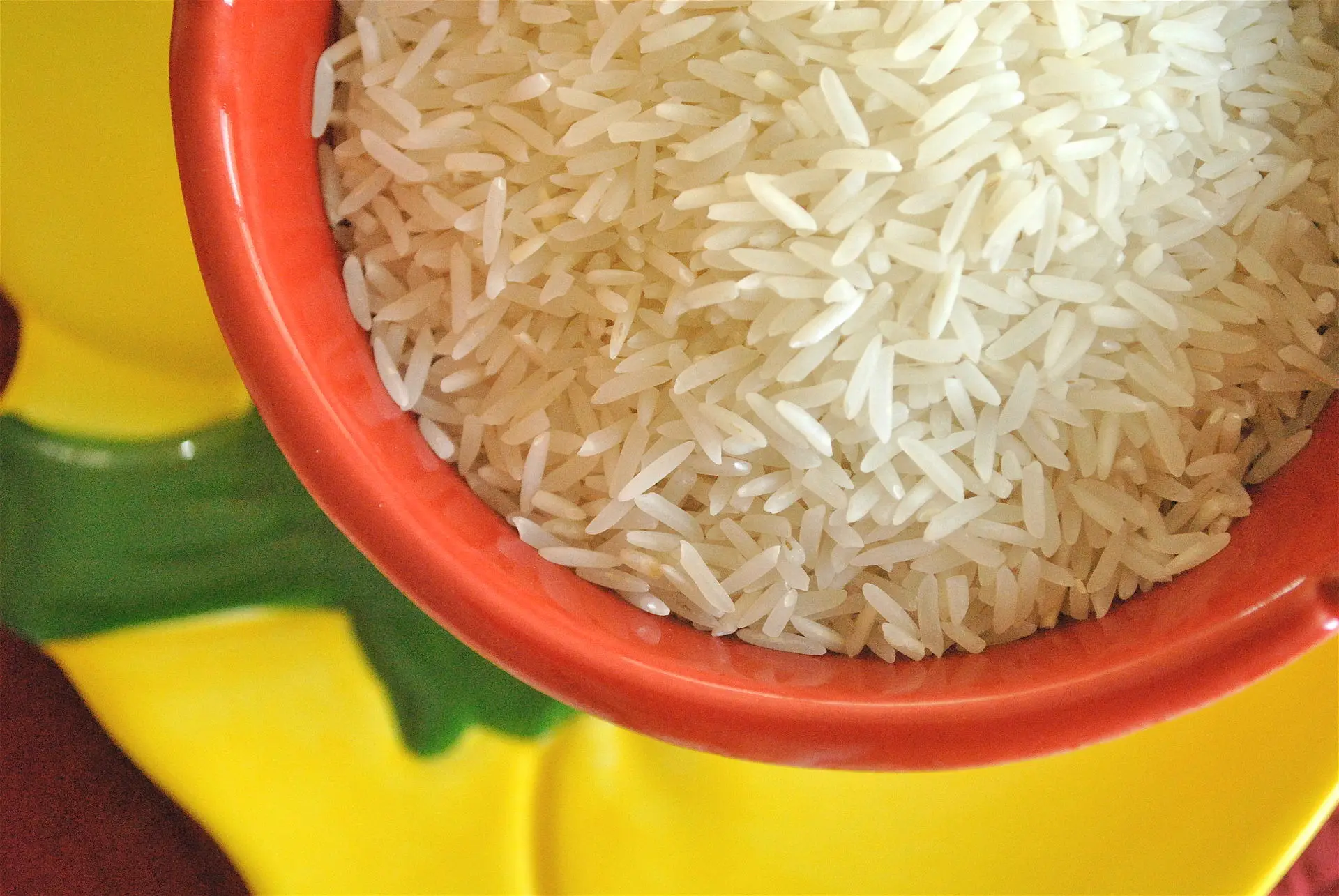
Varieties and grades
Super Kernel Basmati White (polished)
- Average grain length
- Typically 7.0 to 7.4 mm
- Broken grains
- Typically 2% max
- Moisture
- Typically 13% max
- Processing
- Milled and polished, sortex cleaned
- Typical buyers
- Retail brands and wholesalers selling on aroma
Super Kernel Basmati Brown (unpolished)
- Average grain length
- Typically 7.0 to 7.4 mm
- Broken grains
- Typically 2% max
- Moisture
- Typically 13% max
- Processing
- Husk removed, bran layer left on, sortex cleaned
- Storage
- Shorter storage life than white rice; best ordered against confirmed demand
Super Kernel Basmati Parboiled (sella)
- Average grain length
- Typically 7.0 to 7.4 mm
- Broken grains
- Typically 2% max
- Moisture
- Typically 13% max
- Processing
- Parboiled in the husk, then milled and sortex cleaned
- Typical buyers
- Caterers and food-service distributors
Specifications are typical trade parameters. The contract specification for each shipment is confirmed in the written offer.
A traditional Basmati from the Punjab plains
Super Kernel is the trade name for the Basmati that Pakistan has been best known for over several decades. It is grown in Punjab province, in the districts around Gujranwala, Sialkot, Hafizabad and Sheikhupura, where the soil and climate suit aromatic rice. The grain is slender, typically 7.0 to 7.4 mm long after milling, and it has the natural fragrance buyers associate with Basmati without any added flavouring. When cooked it lengthens well and stays soft, which makes it a familiar choice for household pilau and for retail brands that sell on aroma.
How Super Kernel differs from 1121 and PK-386
Buyers often weigh three Pakistani long grain rices against each other. 1121 has the longest grain, typically 8.30 mm or more, and gives the tallest plate, but its aroma is lighter. Super Kernel is shorter than 1121 and has a stronger natural aroma and a softer bite, so it suits customers who judge rice by smell and taste rather than length alone. PK-386 is a long grain rice of similar look, but it is not a Basmati; it has little aroma and sells at a lower price, typically for everyday meals.
Because PK-386 resembles Super Kernel in the bag, the two are sometimes blended, and that is the point a buyer should watch. A contract for Super Kernel should name the variety, the average grain length and the maximum admixture of other varieties. If your market wants a lower price point, it is better to buy PK-386 openly under its own name than to receive it unannounced inside a Basmati lot.
Shipment from Karachi and checks before loading
The rice is milled in Punjab, moved south and loaded at Karachi or Port Qasim for Mombasa and Dar es Salaam; cargo for Uganda continues inland by road from the port. Before a deal is closed, a member of our team is at the mill or the store to draw samples from the stacked lot. Grain length and broken percentage are measured on the sample, moisture is taken with a meter, and a small portion is cooked to judge aroma, elongation and texture against the agreed sample.
Where the buyer asks for it, a sample is sent to a third-party laboratory for varietal purity or DNA testing, and an independent inspection company can be appointed for quality and weight. Bags are check-weighed during stuffing and the container is fumigated as the contract and the importing country require. Import conditions for rice differ in Kenya, Tanzania and Uganda and are revised from time to time, so we confirm the documents needed when the order is placed.
Trade terms
- Packing
- New PP or non-woven bags of 25 kg or 50 kg; other sizes and buyer-brand bags on request.
- Minimum order
- Bulk orders only. Typically one 20ft container (about 25 MT) for imports, or one full truckload for regional and domestic deliveries.
- Shipment
- Full container loads (FCL) or break-bulk for imports through Mombasa and Dar es Salaam; trucks for regional and domestic deliveries.
- Incoterms
- FOB, CFR or CIF for imports; EXW or DAP for regional and domestic deliveries.
- Inspection
- Independent inspection at loading by a recognised inspection company, with our own team on site at loading and at discharge. Pre-shipment inspection as required by the destination bureau of standards.
- Documents
- Commercial invoice, packing list, bill of lading, certificate of origin, phytosanitary certificate and fumigation certificate, as applicable to the shipment.
Frequently asked questions
01Is Super Kernel a genuine Basmati rice?
Yes. Super Kernel is the trade name for a recognised Pakistani Basmati variety grown in Punjab. It should not be confused with PK-386 or other long grain rices that look similar but are not Basmati and have little natural aroma.
02From which port is Pakistani Basmati shipped to Kenya?
It is loaded at Karachi or Port Qasim and discharged at Mombasa for Kenyan buyers. Cargo for Tanzania goes to Dar es Salaam, and Ugandan buyers usually receive it by road from one of those ports. Sailing schedules depend on the shipping line at the time.
03Who buys brown Super Kernel Basmati?
Brown Super Kernel keeps its bran layer and is bought mainly by packers of wholegrain retail lines and by millers who prefer to polish the rice themselves. It has a shorter storage life than white rice, so it is best ordered against confirmed demand.
04How do you check the aroma of a Super Kernel lot?
Aroma cannot be read from a certificate, so a portion of the lot sample is cooked and compared with the approved sample for smell, elongation and softness. Grain length and broken percentage are measured on the same sample, and the findings are sent to the buyer.
05Can one container hold both white and parboiled Super Kernel?
The minimum is typically one 20ft container, about 25 MT. Splitting that container between two forms, for example white and sella, depends on the mill and the stock available, and is confirmed in the written offer rather than assumed.