
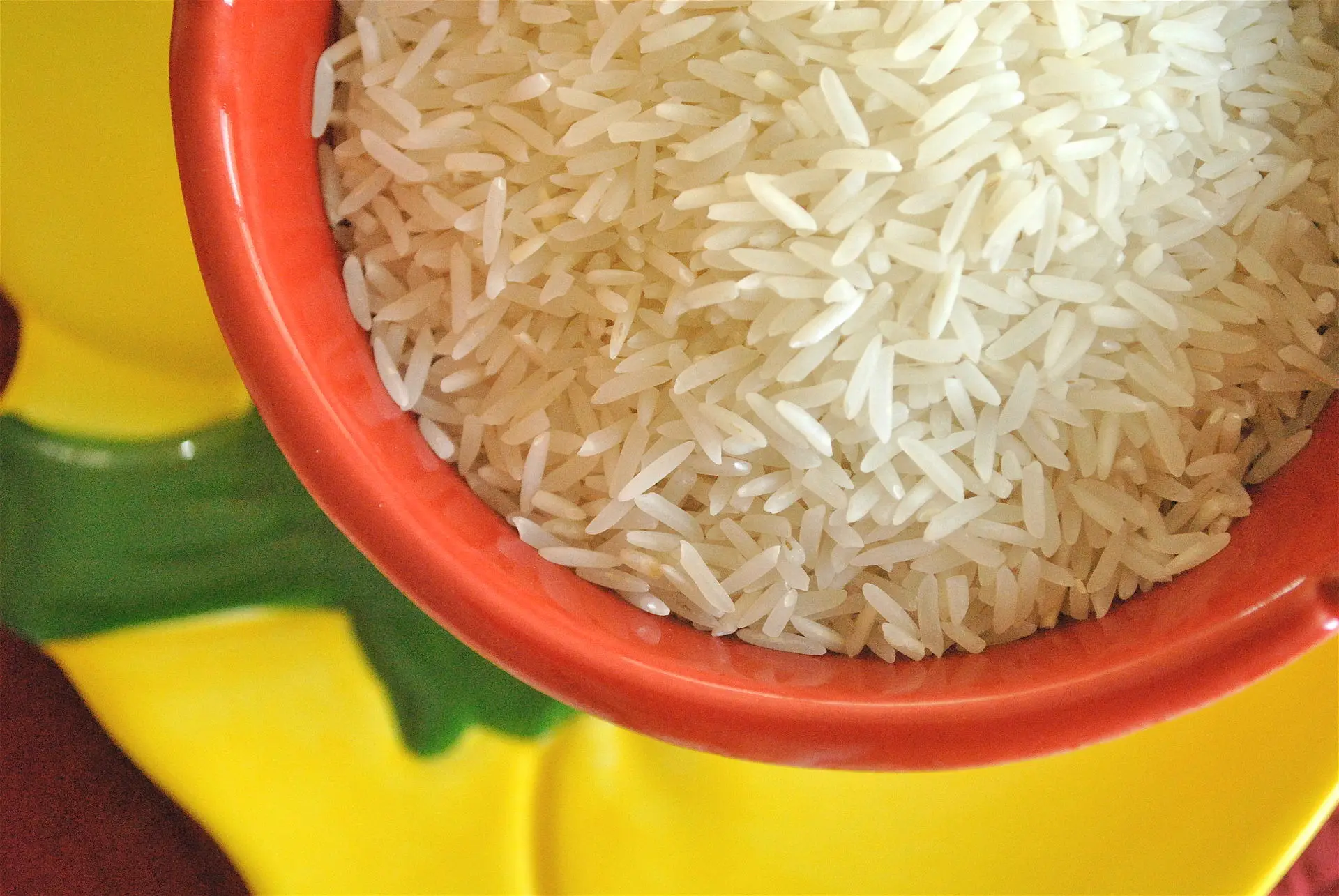
Varieties and grades
1121 Steam Basmati
- Average grain length
- Typically 8.30 mm and above
- Broken grains
- Typically 1% max
- Moisture
- Typically 12.5% max
- Processing
- Paddy steamed before milling, silky polished, sortex cleaned
- Cooking behaviour
- White, firm grains; common in restaurant biryani
1121 White (Creamy) Sella Basmati
- Average grain length
- Typically 8.30 mm and above
- Broken grains
- Typically 1% max
- Moisture
- Typically 13% max
- Processing
- Fully parboiled in the husk, milled to a creamy white, sortex cleaned
- Cooking behaviour
- Firm and separate; tolerates some overcooking
1121 Golden Sella Basmati
- Average grain length
- Typically 8.30 mm and above
- Broken grains
- Typically 1% max
- Moisture
- Typically 13% max
- Processing
- Parboiled at higher heat for a golden colour, sortex cleaned
- Cooking behaviour
- Hardest grain; holds its shape through long cooking and holding
1121 Raw (White) Basmati
- Average grain length
- Typically 8.30 mm and above
- Broken grains
- Typically 2% max
- Moisture
- Typically 12.5% max
- Processing
- Milled without steaming or parboiling, polished, sortex cleaned
- Cooking behaviour
- Softest bite and the most aroma; needs gentler handling
Specifications are typical trade parameters. The contract specification for each shipment is confirmed in the written offer.
What sets 1121 apart from other Basmati
1121, also written Pusa 1121, is a Basmati variety bred in India and now grown mainly in Haryana and Punjab, with a matching crop in the Punjab province of Pakistan. Its selling point is length. The milled grain typically averages 8.30 mm or more, and on cooking it stretches to roughly twice that without thickening much, so a plate of biryani or pilau looks full and the grains stay apart. The aroma is milder than in traditional Basmati types. That combination is why hotels, caterers and premium retail brands across East Africa ask for 1121 by name.
Steam, sella or raw: the four forms on offer
The same paddy is processed in different ways, and the form matters as much as the variety. Steam 1121 is steamed briefly in the husk, which hardens the grain while keeping it white; it is the usual choice for restaurant biryani. White sella, also called creamy sella, is fully parboiled and gives a firmer grain that forgives overcooking. Golden sella is parboiled harder, has a yellow tint and holds its shape for hours in a large catering pot. Raw 1121 is milled with no heat treatment, cooks softest and carries the most aroma, but breaks more easily in handling.
Importers in Mombasa and Dar es Salaam who sell on to wholesalers often prefer sella, because it travels well and suits cooking in large pots. Retail packers selling a premium household pack tend to choose steam or raw for the whiter colour. Each form is priced separately, so it is worth settling this choice first. Tell us the end use and the pack size, and we will send samples of the matching form before a contract is written.
Admixture, ageing and broken grains: how a 1121 lot is checked
The main risk with 1121 is not dirt but substitution. Shorter and cheaper varieties can be blended into a lot, and the blend is hard to see in a closed bag. Before a deal is closed, our own team is at the mill to draw samples from across the lot. On that sample the average grain length is measured, the broken grains are separated and weighed as a percentage, and moisture is read with a meter. Where a buyer requires proof of variety, a sample is sent to a third-party laboratory for DNA or purity testing.
A cooking test is done on the same sample, because length on paper means little if the rice does not elongate. A measured portion is cooked and checked for elongation, separation, aroma and any sticky or burst grains, which usually point to rice that has not been aged long enough. The crop year and ageing period are written into the offer. At loading, bags are check-weighed, the container is inspected and fumigation is carried out as the contract and the destination require, and the reports are shared with the buyer.
Trade terms
- Packing
- New PP or non-woven bags of 25 kg or 50 kg; other sizes and buyer-brand bags on request.
- Minimum order
- Bulk orders only. Typically one 20ft container (about 25 MT) for imports, or one full truckload for regional and domestic deliveries.
- Shipment
- Full container loads (FCL) or break-bulk for imports through Mombasa and Dar es Salaam; trucks for regional and domestic deliveries.
- Incoterms
- FOB, CFR or CIF for imports; EXW or DAP for regional and domestic deliveries.
- Inspection
- Independent inspection at loading by a recognised inspection company, with our own team on site at loading and at discharge. Pre-shipment inspection as required by the destination bureau of standards.
- Documents
- Commercial invoice, packing list, bill of lading, certificate of origin, phytosanitary certificate and fumigation certificate, as applicable to the shipment.
Frequently asked questions
01Which form of 1121 Basmati is best for biryani and pilau?
Most caterers and hotels use steam or sella. Golden sella is the most tolerant of long cooking and holding, white sella sits in between, and steam gives a whiter plate. Raw 1121 suits household cooking where aroma and a softer bite matter more.
02How do you confirm that a lot is pure 1121?
Average grain length and uniformity are measured on a sample drawn from the lot, and a cooking test shows whether shorter grains are mixed in. Where the buyer requires it, a sample goes to a third-party laboratory for DNA or varietal purity testing, and the result is shared before shipment.
03Why does the age of 1121 rice matter?
Freshly milled new-crop Basmati holds more moisture and tends to cook sticky. Rice that has been stored for some months after harvest cooks drier and elongates better. The crop year and the agreed ageing are stated in the written offer so that you know what is being loaded.
04Do you ship 1121 from India or from Pakistan?
Both origins grow 1121. Indian 1121 comes mainly from Haryana and Punjab, and Pakistani 1121 from Punjab province. The origin is fixed in the offer, since export rules, documents and transit differ between the two, and we confirm what applies at the time of the order.
05What is the smallest order of 1121 Basmati you accept?
We trade in bulk only. An order is typically at least one 20ft container, about 25 MT, packed in bags of the size agreed in the contract. Smaller retail quantities are not handled.