
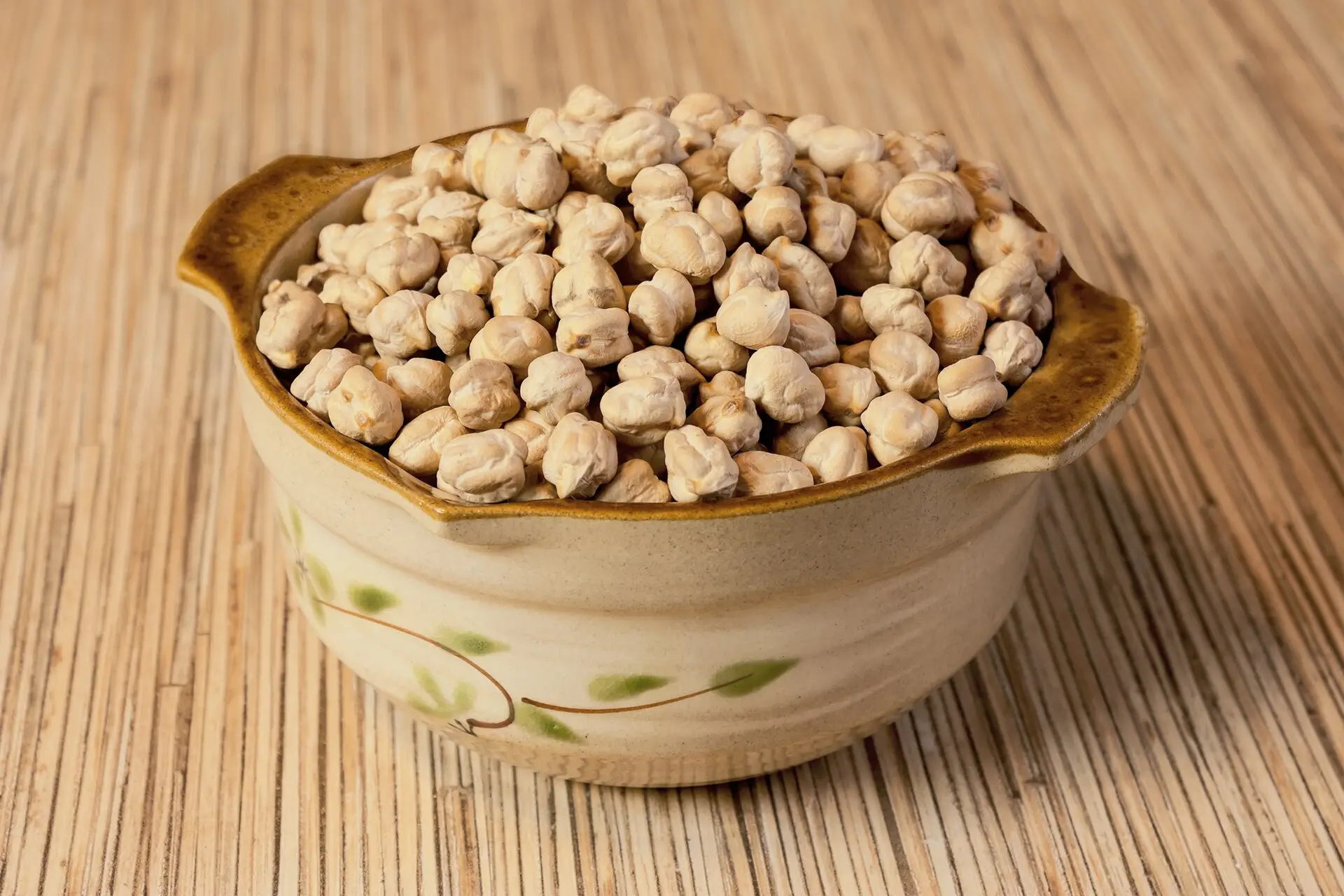
Varieties and grades
Kabuli 9 mm and above (bold)
- Calibre
- Typically 9 mm and above on a round-hole sieve
- Moisture
- Typically 12% max
- Damaged and weevilled seeds
- Typically 1% max
- Foreign matter
- Typically 0.5% max
- Typical buyers
- Hotels, caterers and premium retail packs
Kabuli 8 mm
- Calibre
- Typically 8 mm on a round-hole sieve
- Moisture
- Typically 12% max
- Damaged and weevilled seeds
- Typically 2% max
- Colour
- Even cream to light beige
- Typical buyers
- Retail packers and wholesalers
Kabuli 7 mm
- Calibre
- Typically 7 mm on a round-hole sieve
- Moisture
- Typically 12% max
- Foreign matter
- Typically 1% max
- Typical buyers
- Snack makers, roasters and open-market wholesale
Lots sold by count per ounce
- Common trade counts
- 58-60, 44-46 and 42-44 seeds per ounce
- How to read it
- A lower count means a larger seed
- Confirmation
- Count and sieve size are both checked on the sample and written in the offer
Specifications are typical trade parameters. The contract specification for each shipment is confirmed in the written offer.
Kabuli chickpeas and why calibre sets the price
Kabuli is the large, cream to beige chickpea with a smooth, rounded seed, known in the Indian trade as white chana or Kabuli chana. In India it is grown mainly in Madhya Pradesh, Maharashtra and Gujarat, and it is cleaned and graded at processing plants before export. Unlike most pulses, Kabuli is priced by size. The seed is passed over round-hole sieves and sold by calibre, commonly 7 mm, 8 mm, and 9 mm and above, or by count per ounce. Larger seed costs more, so the calibre you choose decides both your cost and how the product looks in the pack or on the plate.
What we check in a Kabuli lot before it is loaded
A Kabuli lot is judged on evenness. Before a deal is closed, a member of our team goes to the processing plant or warehouse in India and draws samples with a probe from bags across the stack, not only from the front rows. The mixed sample is run over the contract sieve to see how much falls below the calibre, the seeds in one ounce are counted, and a moisture meter reading is taken. We then pick out discoloured, broken, shrivelled and weevil-holed seeds, and any stones or stalks, and express each as a percentage of the sample.
Chickpeas attract storage insects, so the cargo is fumigated before or at loading and a fumigation certificate travels with the documents. Bag weights are checked on a scale during loading. Where the contract or the importing country requires it, an independent inspection company is appointed, and samples can be sent to a third-party laboratory for analysis such as pesticide residue. The results and the loading photographs are shared with you before the documents are released.
Shipping white chana to Mombasa and Dar es Salaam
Kabuli chickpeas are packed in 25 kg or 50 kg polypropylene bags and loaded in 20ft containers, which typically carry about 24 to 25 MT. Cargo for Kenya and Uganda is usually routed through Mombasa, and cargo for Tanzania through Dar es Salaam. Exports are handled against confirmed bulk orders, so the calibre, packing and shipment period are fixed in writing first. Import requirements for pulses, including plant health permits and standards checks, are set by each country and can change, so we confirm what applies to your shipment at the time of the offer rather than rely on last season’s rules.
Trade terms
- Packing
- New PP bags of 25 kg or 50 kg; buyer-brand bags on request.
- Minimum order
- Bulk orders only. Typically one 20ft container (about 25 MT) for imports, or one full truckload for regional and domestic deliveries.
- Shipment
- Full container loads (FCL) for imports through Mombasa and Dar es Salaam; trucks for regional deliveries to Uganda.
- Incoterms
- FOB, CFR or CIF for imports; EXW or DAP for regional and domestic deliveries.
- Inspection
- Independent inspection at loading by a recognised inspection company, with our own team on site at loading and at discharge. Pre-shipment inspection as required by the destination bureau of standards.
- Documents
- Commercial invoice, packing list, bill of lading, certificate of origin, phytosanitary certificate and fumigation certificate, as applicable to the shipment.
Frequently asked questions
01Which calibre of Kabuli chickpeas should I order?
It depends on where the product is going. Hotels, caterers and premium retail packs usually take 9 mm and above because the seed looks bold after cooking. Mainstream retail packers often choose 8 mm. Snack makers and roasters commonly use 7 mm, where an even size matters more than a large one. We can send samples of each calibre so you can compare them side by side.
02What does count per ounce mean for chickpeas?
It is the number of seeds in one ounce, about 28 grams. A count of 42-44 means larger seeds than a count of 58-60. Indian sellers often quote count and millimetre size together, and the two do not always match from one supplier to the next, so we check both on the actual sample and write both into the offer.
03What is the difference between Kabuli and desi chickpeas?
Kabuli chickpeas are larger, cream-coloured and have a thin seed coat; they are mostly cooked whole. Desi chickpeas are smaller and darker, with a thicker coat, and are often split into chana dal or milled into gram flour. This page covers Kabuli only. If you need desi chickpeas, say so in your enquiry.
04How are the chickpeas protected from weevils during the sea voyage?
The lot is inspected for live insects and bored seeds before purchase, the moisture is kept within the contract limit, and the cargo is fumigated before the container is sealed, with a certificate issued. Clean, dry containers are used. After arrival, storage conditions are in the buyer’s hands, so plan dry, ventilated storage and re-fumigation if the stock will be held for long.
05Can one container carry more than one calibre?
The minimum order is typically one 20ft container. Splitting that container between two calibres is sometimes possible when both come from the same processing plant, but it depends on the supplier and must be agreed before the order is confirmed. Each calibre is then bagged, marked and listed separately in the documents.